
Biomimetic Manta Ray Robot
Capstone Project · Camosun College
Summary
Proof-of-concept underwater robot exploring manta ray inspired synthetic locomotion for efficient forward propulsion. Designed as an early platform toward future remote ocean monitoring systems.
Project Snapshot
- Client: Industry Sponsor
- Context: Camosun College Capstone
- Role: Electronics Lead
- My Scope: Embedded control, electronics integration, sealed enclosure coordination
- Deliverables: Concept Fin Propulsion, Solar Charging, Functional underwater robot, electronics enclosure, control firmware, system integration
Development
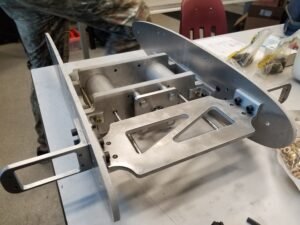
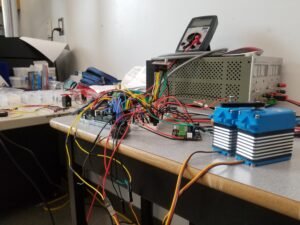
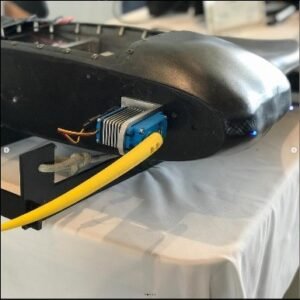
Development was twofold: a watertight, structurally robust chassis capable of housing all required subsystems, and a flexible fin system designed to accurately mimic manta ray propulsion. In parallel, a centralized control system was developed to efficiently manage propulsion, buoyancy, sensing, and lighting through radio-frequency control.
Read More
Team & Project Responsibilities
Multidisciplinary student team responsible for mechanical structure, synthetic fin design, buoyancy system, and controls. The project progressed from concept through fabrication, integration, and pool-based validation within a four-month timeline.
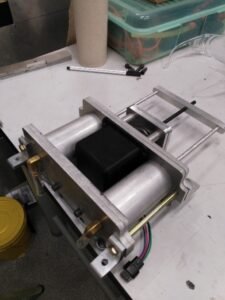
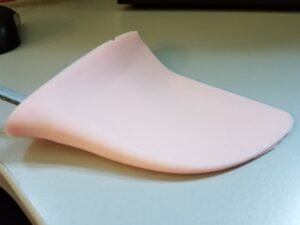
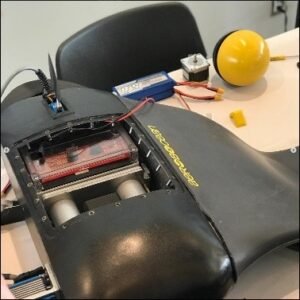
System Architecture
- Arduino Mega based control system
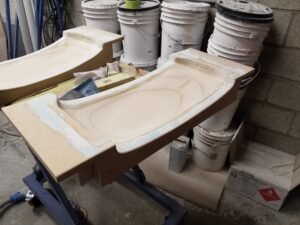
- In house Fiber Glass Shell
- Custom Silicone Fin Design
- 2 high torque servos and 2 micro servos for locomotion and steering
- Stepper motor driven variable buoyancy system
- Solar powered battery charging system
- Moisture sensors and lighting
- Fully sealed electronics enclosure with potted external connectors
My Contributions
- Designed and programmed embedded control firmware on an Arduino Mega
- Developed non blocking control architecture enabling simultaneous actuation of all subsystems
- Assembled and soldered custom protoboard and wiring harnesses
- Created electrical schematics and managed actuator and sensor integration
- Designed and 3D-printed internal electronics mounts
- Integrated solar charging system and assisted with final system assembly
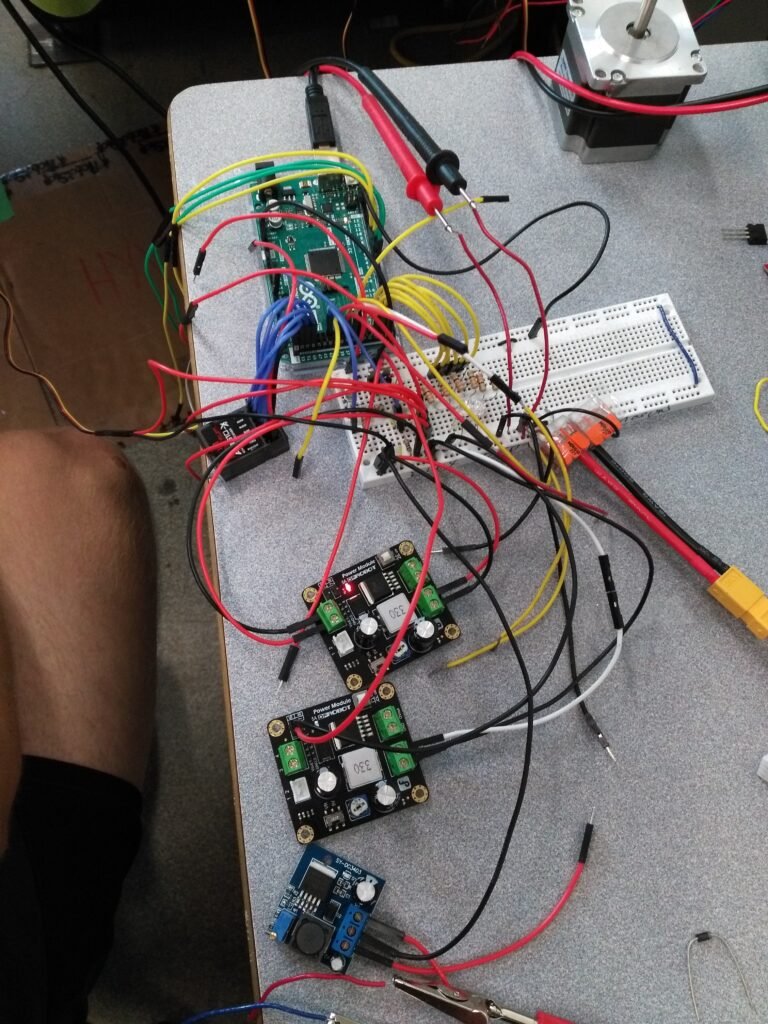
Read More
Challenges
- Managing simultaneous control of multiple actuators without blocking system response
- Balancing enclosure accessibility with redundant water-tight sealing
- Dense wiring and connector routing within a compact, sealed volume
- Final integration completed under severe time constraints
Biggest Takeaways
- Non blocking firmware design is critical for real time robotic control
- Redundant sealing strategies significantly reduce integration risk
- Early architectural decisions strongly affect late stage integration success
- System level thinking matters more than optimizing individual components
Project Outcomes
- Successfully demonstrated underwater locomotion in pool testing
- Concept proven within project timeline
- Sponsor company continued development post project and captured video of the robot swimming (Below)